A 10% supplier price rise, worked through one dish.
Ingredients up 10%, menu price unchanged. One dish, three numbers, and why the loss is easy to miss.
Published 29 September 2026
The dish
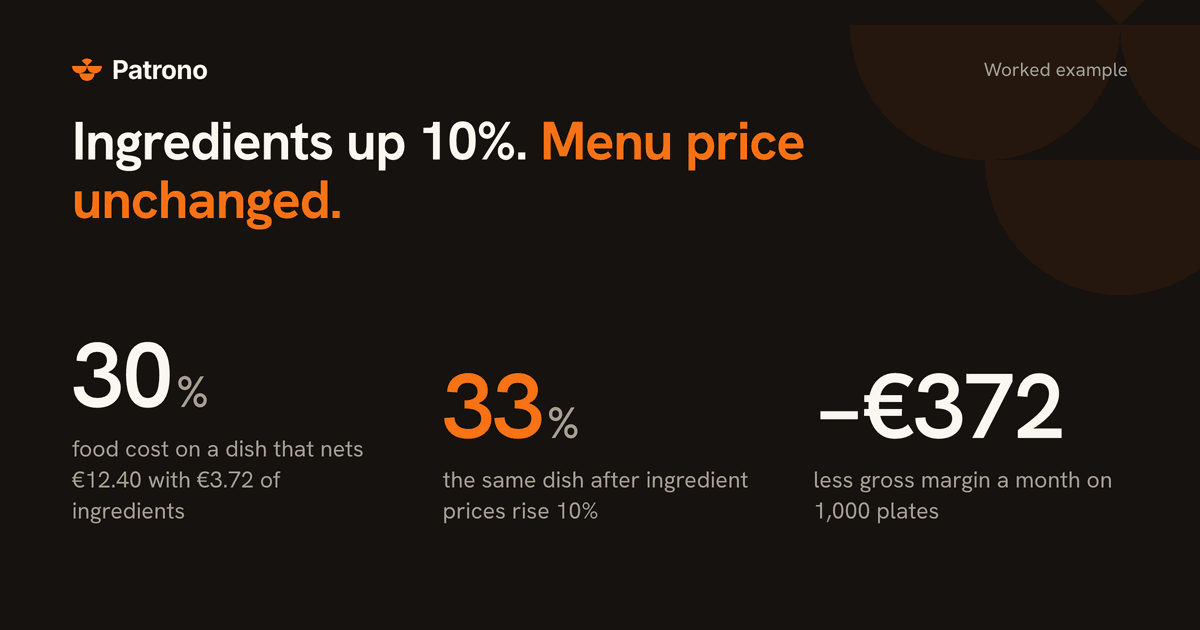
This is an illustrative example, not data from a specific venue. Take a dish that brings in €12.40 net of VAT and uses €3.72 of ingredients. Food cost is €3.72 divided by €12.40, which is 30%.
The price rise
The supplier raises prices by 10%. The same ingredients now cost €4.09. The menu price stays the same, so food cost rises to 33%. Gross margin per plate falls from €8.68 to €8.31, which is €0.37 less on every plate.
Why nobody notices
On 1,000 plates a month the gap is €372. It rarely shows up as a single event: invoices arrive one by one, the menu is priced once a season, and the loss sits inside the monthly total until someone recalculates the recipe.
What to do
Keep a recipe for every dish with quantities, link each ingredient to its latest supplier price, and recalculate food cost when an invoice arrives, not at month end. In Patrono a price change on an ingredient updates the margin of every dish that uses it.
Takeaway
A 10% rise in ingredient prices is three points of food cost. Caught the week it happens, it is a menu decision. Caught at month end, it is a loss.
Apply this in your venue.
30-minute demo on your data. We will show you exactly where you can close the gap described in the article.